A long-term project like a thesis is a marathon, not a sprint. This has been a difficult adjustment for me. In almost every other research project I’ve done at Princeton, I’ve chosen the last-minute sprint model, rather than a more organized long-term approach. Sprinting hasn’t worked well in the past, but it won’t work at all for a thesis. There’s simply too much involved in a thesis to cram it into the few weeks before the deadline.
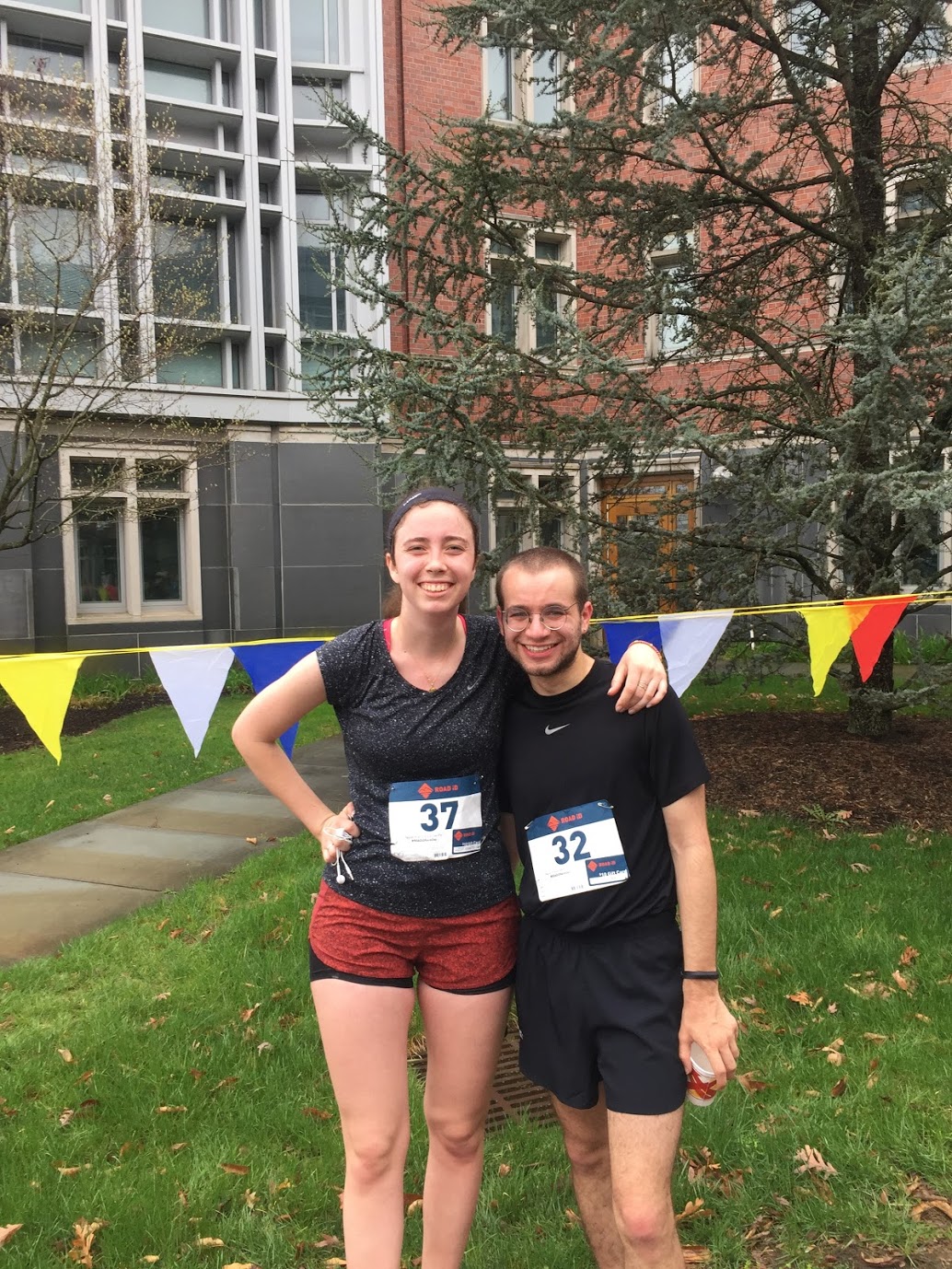
My thesis buddy and me cheesing at the finish line of a 5K last spring. It’s never too early to start training for the thesis marathon!
The marathon approach is new to me, so I looked up some tips for how to train for an actual marathon. I was surprised how many were relevant for a long-term project like a thesis or a final paper. I’ve collected my ten favorites here:
First-years, you’ve just survived everyone’s favorite time of year: your first Writing Seminar deadline. Over the course of the past few weeks, you’ve learned the difference between motive and thesis, discussed strategies for analyzing data, written a draft of your first essay, and finally, turned in your first piece of graded work: your R1!
The process of going from an ungraded draft to a graded revision may have seemed intimidating. In part, this is because most first-years have little to no experience with serious revision of essays. In high school, when standards were lower, I, like many others, got away with handing in first drafts most of the time. When I did make the time to revise, my “revision” consisted mainly of adding a few fancy words to my essay and tightening up my conclusion. So when I got to my Writing Seminar and was essentially told to rewrite my entire essay, I panicked.
Did I have to completely start over? Was all my D1 work wasted? As I had no experience with the revision process, I struggled to even begin the process of writing my R1. So if you felt the same way after handing in your R1, read on: I promise that your next two revisions will be made much easier (and dare I say, pleasant?) with the help of a few key strategies.
As my time as a Princeton student quickly comes to a close (it’s scary just thinking about it), it becomes imperative to look ahead to what the future holds for me. I’ve known that I want to go to law school for a while now (see this post for an interview with a current law school student). In high school, I wrote a paper about the practice of child marriage in certain areas of the world, and I began longing to take part in a system that would correct such injustices. Since then, I’ve educated myself on a wider variety of injustices and have come to focus on the American prison system while expanding my interest in the law.
Last spring, my JP adviser passed on a piece of wisdom from his graduate adviser: for a research project, you should spend one third of your time reading, one third of your time writing, and one third of your time editing.
This was new to me. Historically, I’d spent 80% of my time reading, 19% of my time writing, and 1% (at best) of my time editing. I had always told myself that it didn’t make sense to start writing until I’d read everything and figured out what I wanted to say. Also, reading almost always felt easier and safer than writing. Instead of constructing my own ideas, I could sit back and receive other people’s finished products.
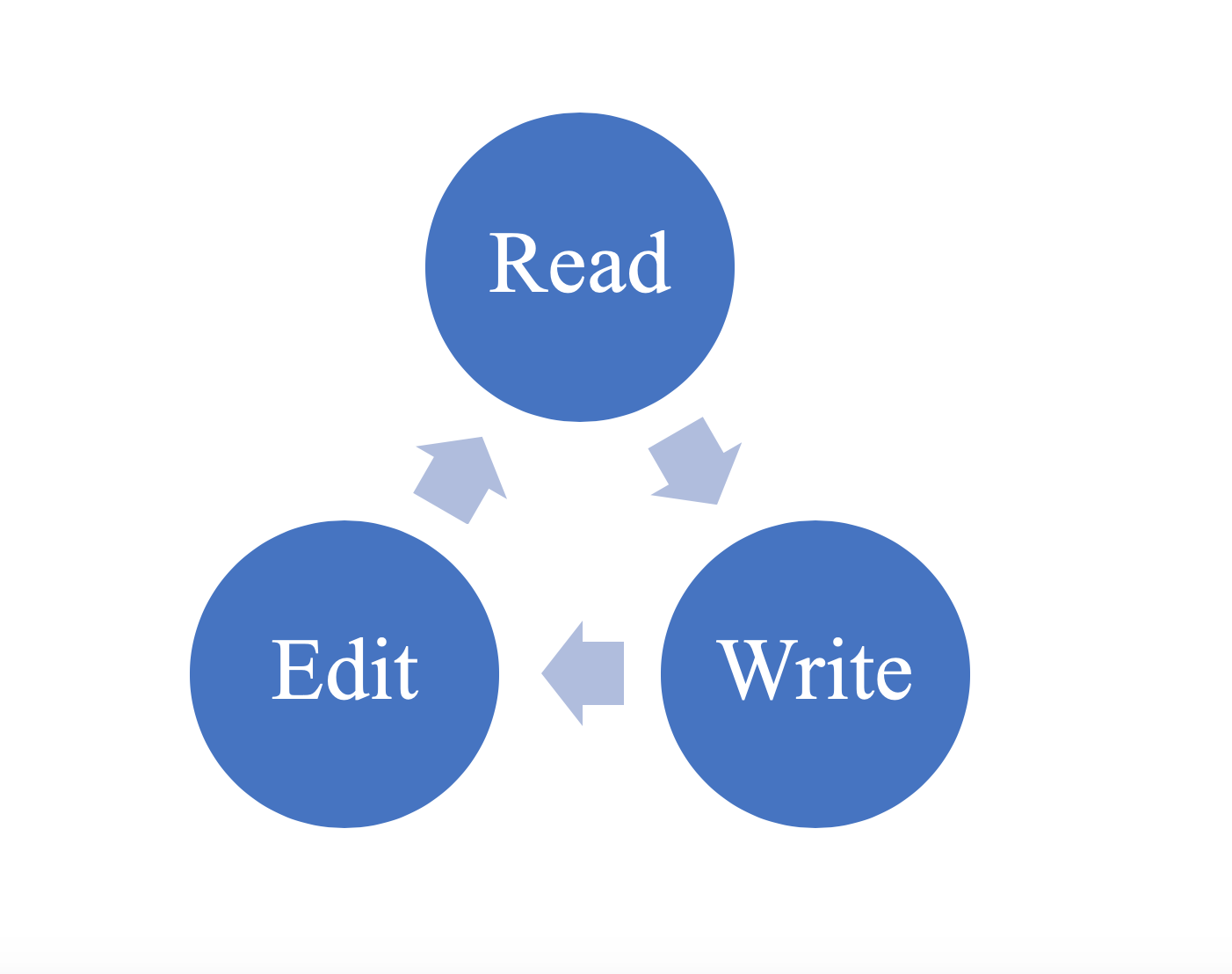
The research cycle: read, write, edit.
The problem was: I never ran out of things to read. Most of the time, I would only start writing once the deadline was in sight and I had no more time to waste. Rarely would I have enough time to edit my work.
For my thesis, though, I’m trying to follow my JP adviser’s system, spending equal amounts of time reading, writing, and editing. It took me until this week to realize that I need to treat these three elements as parts of a cycle, rather than macro chronological steps. In other words, I realized that I shouldn’t spend the first half of my fall semester just reading, the next few months writing, and the next few months editing. I need to be doing all three simultaneously. My reading, writing, and editing should be working in tandem with each other.
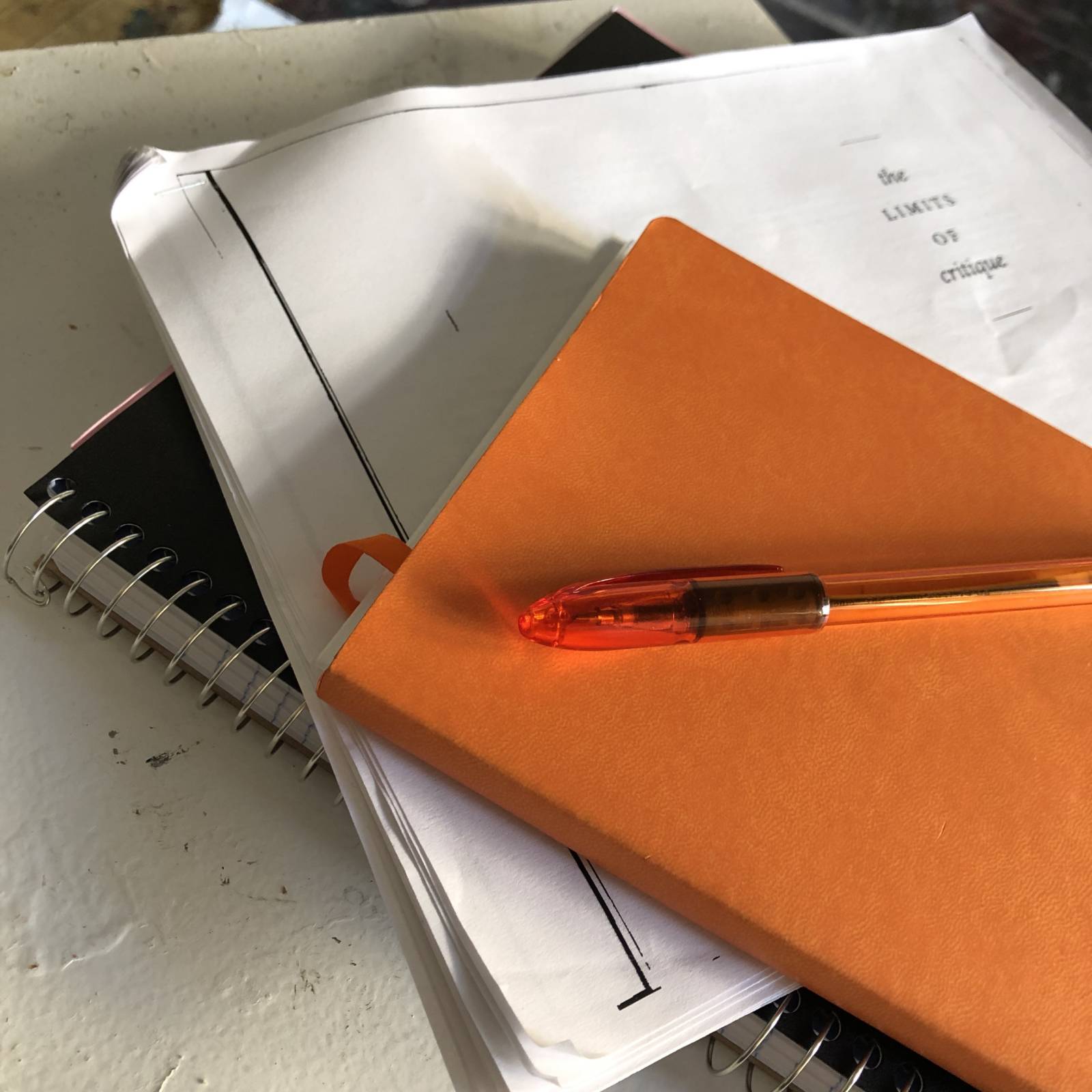
The author’s research notebooks alongside excerpts from Rita Felski’s The Limits of Critique, which partly inspired this post.
As we work our way into the fall semester, my fellow seniors might find some truth in the well-worn Dickens adage, “It [is] the best of times, it [is] the worst of times.” While this sentiment assumes a different shape and quality for each of us, it does seem generally fair to say that our final fall of college brings with it many joys—such as the enjoyment of established friendships, institutional and departmental familiarity, and an overall excitement about the many possibilities ahead—as well as certain unique stressors, such as discerning what in the great wide world to do after graduation and, of course, writing that Senior Thesis. While no one blog post can assuage all of our collective life-directional angst, that needn’t stop us from thinking about how to make our present situation a little brighter. One key way in which I suggest we can do this is by reframing how we view our theses. Which is to say, if your thesis currently makes you feel stressed, bored, uneasy, or generally bad, I hope you will read on. (more…)
The infamous Senior Thesis is a source of stress and anxiety for many students. Although there are information sessions galore for juniors, I didn’t feel like I actually understood the process until I started it. This summer, I began my thesis research process by traveling to Norway to collect observational data on the country’s prison system.
I’ve known that I wanted to do science research since the age of sixteen, when I spent my first summer in a neuroscience lab. My time in the lab taught me many new skills and enabled me to immediately apply them to unsolved problems–what other summer job could be more interesting than that? Though my specific interests have shifted slightly (I’m now a chemical and biological engineer rather than a neuroscientist), I’ve devoted every summer since to benchwork of some sort.
Consequently, when I started to look for laboratory opportunities last year, I immediately gravitated towards biology research. I had loved the past three summers–why not experience another? In the winter, I applied to internships through Princeton’s International Internship Program (IIP), and I was lucky enough to receive an offer to study the mechanisms of Shigella (a bacterium that causes dysentery) infection at the Pasteur Institute in Paris, France. I accepted immediately, thrilled that I’d be spending my summer abroad–and on Princeton’s dime!
But as the year wore on, I started to consider what the added value of another summer of wet-lab research would be, especially since time constraints would limit my contribution. I felt like was narrowing in on my chosen field too early. Wouldn’t I be bored?
The 2019-2020 academic year is up and running! Classes are in session, recruiting season is upon us, and our first paper deadlines are approaching. PCUR is back too as a resource to help guide you through this year. Our correspondents from across grade levels and academic disciplines will reflect on their own experiences, share tips that they have learned along the way, and raise awareness of the countless research-related opportunities and resources Princeton has to offer. Be sure to take a look at our first post of the year where Rafi offers advice on how to reduce independent work stress.
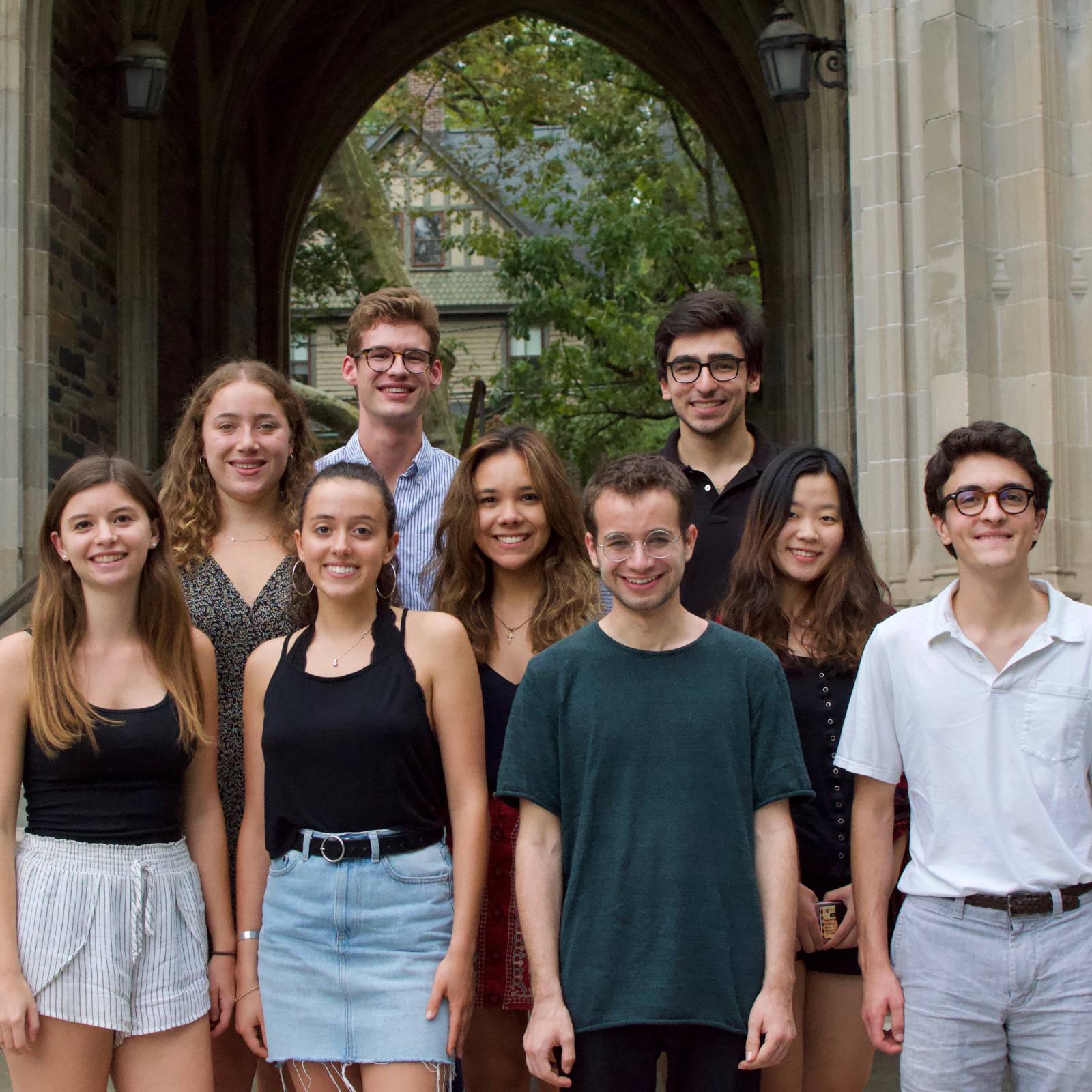
Our 2019-2020 correspondents!
Along with our returning correspondents Rafi, Shanon, Andrea, Saira, and Alec, we have three new sophomore correspondents Ella, Kamron, and Soo. Check out their bios below!
Last fall, in a cubicle on the B-floor of Firestone, you might have seen me scrolling through my unfinished JP. It would have looked unremarkable. I had been working on my JP in the same cubicle for weeks. Except this time, my JP was due to my department in two hours and I was realizing I had about 25 pages of footnotes to complete. I was panicking: crying and shaking while typing faster than I’ve ever typed before.
Luckily, I was able to complete the citations and submit my JP with three minutes to spare! But it took me the rest of the night to recover from the experience (and, to be honest, I still get a rush of anxiety every time I think about it). I promised myself I would never allow myself to end up in the same situation again.
A selfie I took just minutes after submitting my first JP last fall…
Whether it’s a final paper, a JP, or a thesis, here are some tools I’ve been using to help me beat the panic of independent work:
For this year’s Spring Seasonal Series, entitled Post-Princeton Life: The Experiences of PCUR Alumni, each correspondent has selected a PCUR alum to interview about what they have been up to. We hope that these interviews will provide helpful insight into the many different paths Princeton students take after graduation. Here, Raya shares her interview.
~~~
Teaching, travel, Congress, the Writing Center, political theory, Yale! Former PCUR chief correspondent Isabelle Laurenzi graduated from Princeton in 2015 with a degree in Religion. She has since gone on to pursue an array of adventures and projects. Most recently, Isabelle completed her first year of a Ph.D. program at Yale in political theory. For our seasonal spring series, I caught up with Isabelle to learn more about her time at Princeton and explorations after. In our conversation, Isabelle and I connected over our shared interest in interdisciplinary studies and the joy of pursuing one’s interests through varied avenues.