I remember feeling blindsided by thesis talk my junior spring. I was in the middle of my second JP—I didn’t have a topic, an adviser, or any idea where to start. But I knew I needed to start my research in the summer before senior year. If I had learned anything from my JPs, it was that I would need all the time I could get to complete a research project of this scale.
Juniors: whether you’ve already applied for thesis funding or haven’t yet thought about your thesis at all, now is the time to make a summer thesis plan. Remember: every hour you invest over the summer is an hour saved during the semester, when you’ll be back to balancing coursework, job/grad school applications, and extracurricular obligations.
This summer, I was doing an internship in São Paulo, but I spent my evenings and weekends at a local library, reading sources for my thesis. It wasn’t fun, but I’ve thanked myself for it every day this year.
As I prepare to submit my thesis this month, I’ve thought back to my own junior spring and collected five things I wish I’d known before my thesis summer:
In these crazy times navigating COVID-19 it can be challenging to plan for such an uncertain future. However, in these past few weeks, I have found it comforting to continue to look towards the possibilities of what life may hold in the coming months after this unorthodox semester blends into summer and the academic year begins again. For many of you, you will be returning to Princeton to continue your undergraduate careers. The class of 2020 will be entering the next chapter of their lives, and for me, that means beginning a Ph.D. program in Psychology.
The author with her adviser who she has worked with on her junior and senior independent work. Research advisers are incredibly helpful in the grad school application process.
With so much unknown, I hope to provide some insight into the graduate school application process for those of you that may be considering pursuing an advanced degree. In this post, I’ll talk about the process of selecting which programs to apply to. If you are unsure whether graduate school is the right path for you, check out my last post in this series. If you are ready to dive into the process and begin exploring all of the exciting possibilities and programs out there, read on!
We’ve all been there. We all know what it feels like to take a break—whether it’s on purpose or by accident—from a lengthy paper; it can be overwhelming when you realize that you messed up your writing process timeline. Personally, I recently took a looooong break (think: three weeks, give or take) from writing my thesis. Part of it was by accident; due to COVID-19, all Princeton students were told to move out and head back home for the remainder of the semester. The stress of packing, saying goodbye to my friends and the campus, and moving out caused my thesis to take a backseat in terms of priorities. Once I arrived home, I purposefully decided to extend my break from writing my thesis in order to unpack, get settled, and get used to online classes. One day lead to the next, and suddenly, I had spent three weeks away from my thesis.
It’s hard to hold yourself accountable about your thesis during breaks.
This semester, as I return to writing for PCUR, I will be publishing a series of posts describing my experience with the graduate school application process, applying to a variety of developmental psychology PhD programs. Throughout the process, I was fortunate enough to have guidance from my independent work adviser and other senior members of my research lab on campus. However, even with this support, I often found that the process was incredibly opaque. I spent hours searching for answers to seemingly simple questions, often never coming to a definitive conclusion. I hope to use this series of posts to shed some light on the many facets of the process. Although I can only speak to my personal experience, I hope to provide valuable information that can be helpful to students from a variety of disciplines.
The author posing with a picture book she wrote for her thesis study. She spent the summer before her senior year working in her lab full-time to collect data.
Before getting into the nitty gritty of the application process itself, the first step is deciding whether or not you want to go to graduate school in the first place. Graduate school, especially PhD programs, are long, so before you commit to spending up to 6 years in a program, it is important to make sure grad school is the right path for you.
[Note:This post was written before COVID-19 reconfigured our library access. Interlibrary Loan is no longer accessible for students, but its sister program, Article Express, is still running at full speed!]
Every so often, when reading sources for my thesis, I come
across a citation for a book or article I can’t find in the Princeton library catalog.
Of course, given the size of Princeton’s holdings, these moments are rare—though
somewhat more frequent as I’ve entered the fine-grain stages of my research
project. In the past, a dead end in the library catalog was enough to convince
me to give up on a source. However, the exigencies of my last month of thesis writing
have pushed me to use what might just be the most magical tool in the Princeton
library toolbox: Interlibrary
Loan (ILL).
A detail from a 1967 event program I received through Interlibrary Loan this month. Some of the pages were still uncut when I received it!
Whereas Borrow Direct and Recap only provide access to books listed in the Princeton library catalog, Interlibrary Loan can provide access to… pretty much any source you could possibly need. ILL has two main request options: Article Express (for scans of specific articles and book chapters) and Interlibrary Loan (for larger sources, like books, audio/visual materials, and microreels).
Last semester, I fell in love with a cemetery. I had been
interested in the processes of death and dying during the height of the AIDS epidemic
in New York City and hoped to write one (or more) of my final papers about the
topic. A quick series of Google searches led me to Hart Island, a public cemetery
where nearly a million unclaimed or indigent people are buried, including many
victims of AIDS. I was fascinated. I read everything I could find about Hart
Island, watched over a dozen YouTube videos, and even scheduled a visit to the
cemetery with a friend.
By the time reading period came along, I had over forty pages of notes about this cemetery. But I had no idea how to write a paper about it. When I met with one of my professors to ask for help, I started to share all of the data I had collected about this site—its history, its design, its present-day controversies. After a few minutes of this, she intervened: “Great, but what’s your question?” I looked at her blankly. “Do you have a question about this site?”
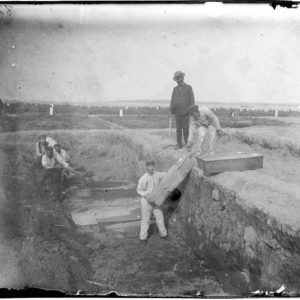
Photograph of burials at Hart Island, ca. 1890.
Developing a research question is hardly a new idea. It’s emphasized
in the Writing Seminar curriculum, and professors often require us to articulate
questions at the early stages of our projects. But once we get buried in the work
itself—collecting data, writing, meeting deadlines and assignment requirements—it
can be easy to forget why we’re writing at all.
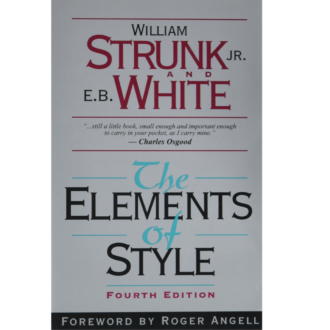
The cover of Strunk and White’s The Elements of Style. In this post, I suggest that consulting a style guide such as this can be a useful step toward improving your writing.
As regular readers of this blog will know, several other PCURs and I are in the throes of writing our theses. Personally, I’ve been thinking a lot about writing: what makes it effective, what strategies are successful, and what I can do to improve my own. I am by no means an expert writer, but in this post I will share a few tactics that have proven useful as I progress towards a submission-ready senior thesis. While this reflection stems from my own thesis experiences, I hope that writers of all class years and departments might find in it some principles of general applicability.
My most recent post focused on gearing up towards your senior year and finding a thesis adviser. I decided to continue this mini “preparing for your senior thesis” series by providing some tips on funding your research! The infamous senior thesis is such a daunting thing to think about as a junior because it is not always clear how early you should begin to plan for it and what steps you should take. At the beginning of the year, I attended an information session through the Woodrow Wilson School regarding thesis research funding. During that meeting, the speakers told students that they should start working on applications for funding as soon as possible if they wanted to receive money for their endeavors.
The Student Activities Funding Engine (“SAFE”) offers many opportunities to apply for funding!
A Senior Thesis boot camp held in Rocky Dining Hall over spring break, 2016. The author participated in a similar boot camp, organized by Mathey College, during Intercession 2020.
Working on my thesis over intercession, I found myself thinking about language. As anyone who has studied a foreign language likely knows, there are few substitutes for immersion. If we really want to learn a new tongue, be it French or German or Turkish or Spanish, we should spend as much time and mental energy as possible thinking about it. In this post, I suggest that there’s a transferrable lesson for thesis writers here.
During finals season, it’s even harder than usual to make time for independent work. So this reading period, I decided to ask a senior, computer science major Sam Arnesen, about the state of his thesis and his plans for spring semester. For his senior thesis, Sam is developing artificial intelligence software that can solve text-based computer games.
Sam, hard at work on his thesis.
What is your thesis about? My thesis is on text-based games–games like Zork where at every step of the game, you’re given a text description of the scene you’re in and you have to enter some text about what the next move is, like “pick up sword” or “open door.” You can imagine that we often teach computers to play games, but there are a few unique challenges associated with text-based games. Part of it is that it is partially observed: you can see what’s around you, but you can’t see the entire state of the game. The other thing is that it’s very difficult to parse the text and translate it into something meaningful, especially when it comes to actions. There’s stuff out there on various methods to do text-based games and be able to play simple versions of them, but they have a couple issues. First, most of the games are quite simple, and more importantly, the kinds of strategies that it would learn translate very poorly between games unless the games are extremely similar, which is bad because you would expect that certain skills (like having a key and a locked door, or remembering orientations) would be understood. The whole reason why we care about text-based games isn’t because it means anything to play the game, but because we want to be able to learn something about language through these games. So it’s bad if the agents are specific to one particular game, because it suggests that they’re learning idiosyncrasies of the game instead of actual language skills.
I’m specifically working on ways to have more transfer of learning between different kinds of text-based games. I am working on building an agent that’s able to parse walk-throughs of games. A walk-through happens in any kind of game, it’s a set of instructions that tell you what you should do at every step. That’s a non-trivial task: you have to parse that text, translate a paragraph into an action, figure out whether the action you took was the correct action, and be able to use the strategies you learn through parsing the walk-through to learn some general strategy.