The Princeton Perspective Project (PPP) is an initiative by Princeton students against the expectation of “effortless perfection.” Our seasonal series in partnership with PPP interviewed professors, undergraduate students, and graduate students to hear their thoughts on expectations, challenges, failures, and growth through it all. In this segment of our Seasonal Series, we hear from Cara Khalifeh, the Treasurer of the Princeton Perspective Project.
For this post in our collaboration with Princeton Perspectives Project I dusted off my blog-writing skills and had the pleasure of interviewing 2nd year EEB PhD student Kelly Finke. She uses computational biology techniques to study collective human behavior in Professor Corina Tarnita’s lab.
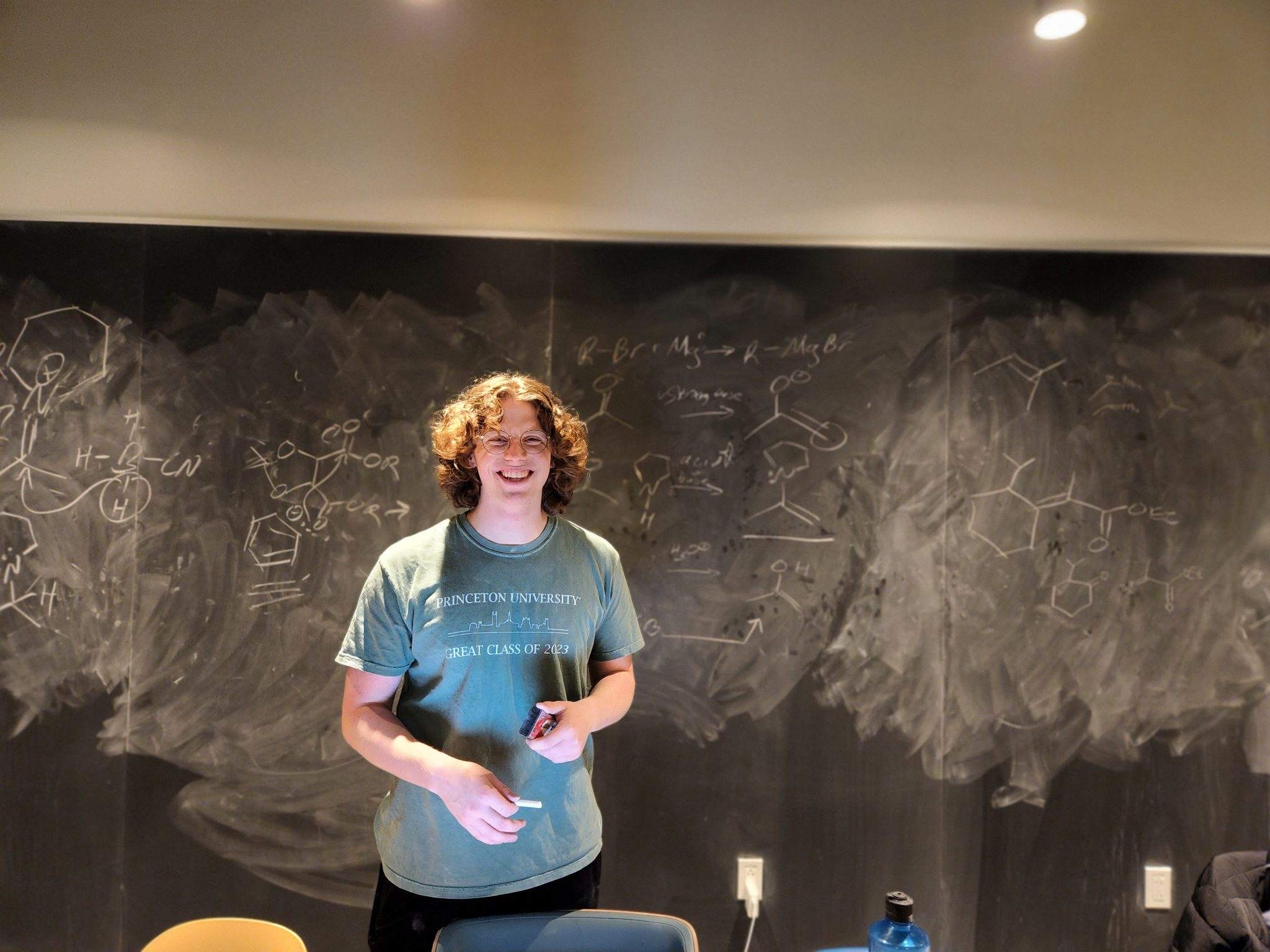
Princeton Senior and Orgo TA Tom Silldorff offers numerous tutoring sessions in Choi Dining Hall (Yeh/NCW) for all students in Organic Chemistry.
As part of our collaboration with the Princeton Perspectives Project (PPP), we’re exploring how the idealized notion of “effortless perfection”—the idea that a path to success must be free of failure—obscures the reality of both the research process and mastering a new subject. For many students, there are few better examples of this phenomenon than the Organic Chemistry course. Almost regardless of who is teaching or how it is taught, “Orgo” has earned near-universal notoriety for its complicated labs, unconventional approach, and the immense, complex breadth of material that students must learn to conceptualize and then apply. Orgo students must learn to think in an entirely new way, and this process can be uncomfortable. Challenges, mistakes, and “failure” are bound to occur along the way. Yet, often, it is through confronting these very challenges that students grow not only as future academics, engineers, or doctors—but as people.