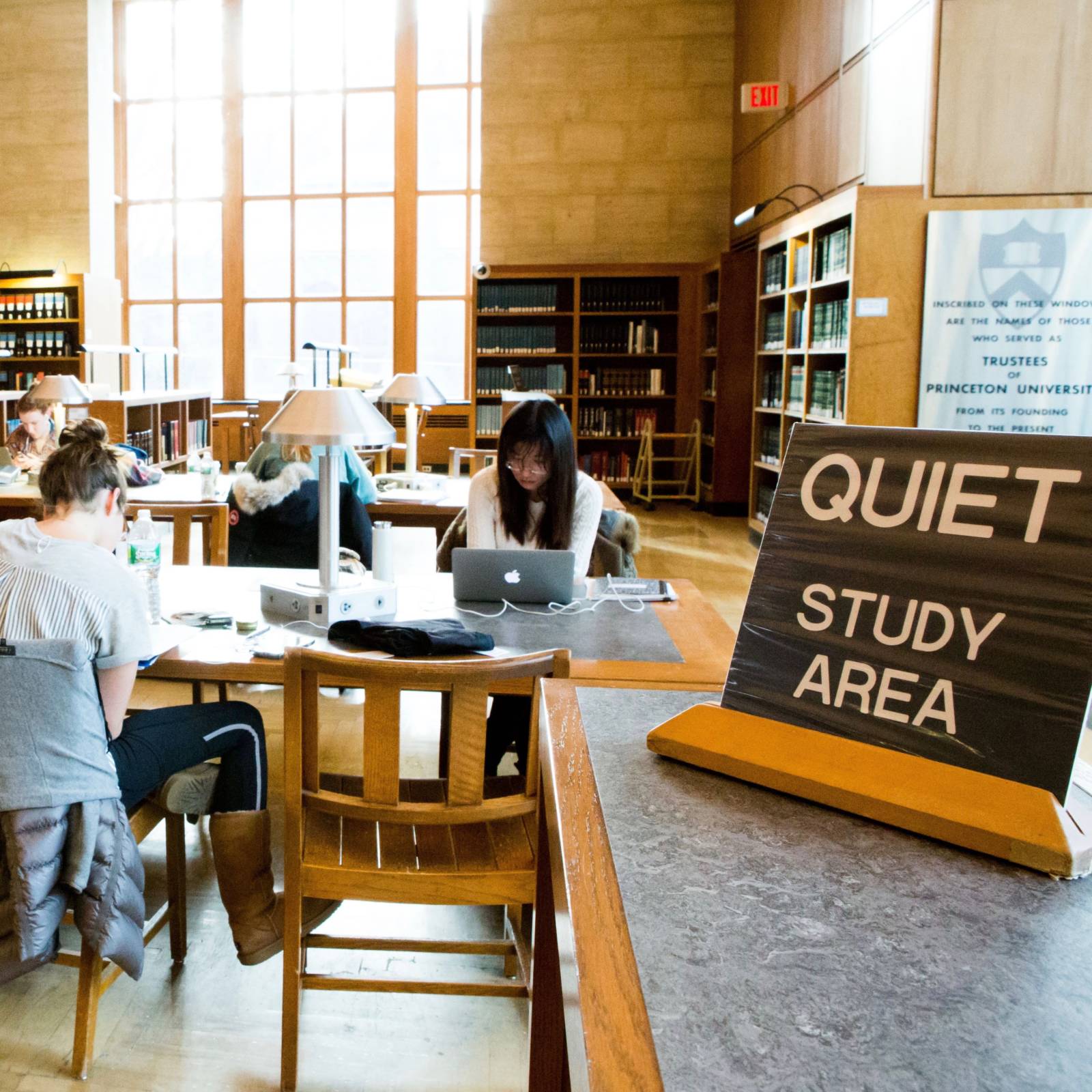
Identifying a suitable study location is one important aspect of getting ready for midterms week.
It’s hard to believe, but Fall 2018 midterms are coming up. Perhaps your professors have begun to talk about past exams or paper topics. Or maybe you’re just looking at some ominous exam dates on the syllabus, poised like a roadblock between you and the glorious week of Fall Break. Friends, I’m here to tell you that it’s going to be alright. Whether these are your first fall midterms or your last (!), this post will share some surefire strategies that you can use to get yourself ready for the first major round of testing of the academic year. While I will share some specific study strategies, I’ll mainly focus on steps you can take to get yourself ready to study. That way, when the studying actually begins, you’ll have greater peace of mind knowing that you have an overall plan for the week.
Have you ever wanted to learn how to use Photoshop? How to write code in multiple programming languages? How to use Excel? InDesign? Adobe Illustrator?
My new favorite online resource.
This semester, as part of my Urban Studies Certificate, I’m taking ARC 205, an interdisciplinary architectural design studio. Like most studio classes, we meet for six hours a week to develop our drawing, design, and analysis skills. Each week our instructors present us with a new drawing assignment designed to improve our architectural analysis skills. Pretty much everything we’re learning in this class is totally new to me. I’ve never really drawn – aside from doodles on my notes – and most of our assignments are far outside of my comfort zone. There hasn’t yet been a week when I’ve felt confident about my work, but in the past week, I’ve discovered a resource that might change that.
This is it. After an R3, two JPs, and the countless research papers in between, I’m expected to craft the 15,000 to 20,000-word magnum opus of my Princeton career. And I have to say, I still don’t really know how it’s all going to go down.
There’s something I like to call the “black box” of every Princeton student’s research career. You’re given a massive independent research project to undertake, then some wizardry happens in Firestone, a lab, or studio, and voilà everything is complete! This second “magical” step is the black box: no one from the outside can see what goes into the project’s actual assembly. We only see stress as a side effect of this mystical process, and then a final product. Throughout the year, I hope to demystify this black box by revealing my own thesis-writing process: the highs, lows, brainstorming, writing, and of course, the research.
The “black box” metaphor is actually computing jargon for a system only understood in terms of inputs and outputs, with its inner workings remaining mysterious. To paraphrase one of my favorite movies Se7en, “What’s in the [thesis] box?” We’ll find out together!So what does writing my thesis look like in its initial stages? Right now I’m still brainstorming and narrowing down my thesis topic, which will be about how Public Service Announcements (PSAs) subvert the capitalist practices within traditional commercial advertising, using some French theory as a lens (shout out to the Department of French and Italian!). Fortunately and unfortunately that’s a broad topic with nearly infinite directions, so I’m working on figuring out more specific direction.
I’m beginning this process by looking at my JPs, which also dealt with my thesis topic, but used a small number of specific examples. Both papers were divided into sections where I argued different points, and while re-reading them, I’m treating each section as if it were its own paper related to my thesis. I’m asking myself questions like: Assuming I had ten more pages to write for each section, which other theories could I incorporate to corroborate the arguments I was making? How can I specifically incorporate the topic of capitalism? How would different theorists critique my arguments, and how can this inform a strong rebuttal?
After enjoying a summer of traveling, volunteering, camping, interning, hanging out with friends or whatever other shenanigans you might have been up to, it can be difficult to get back into the Princeton mindset.
Even though we are already a month in to the semester, I am still trying to remember how to do school! If you’re anything like me, you’re still working to rebuild your study habits. As we all begin to prepare for midterms (eek!), here are some study tips and tactics tailored to your learning style.
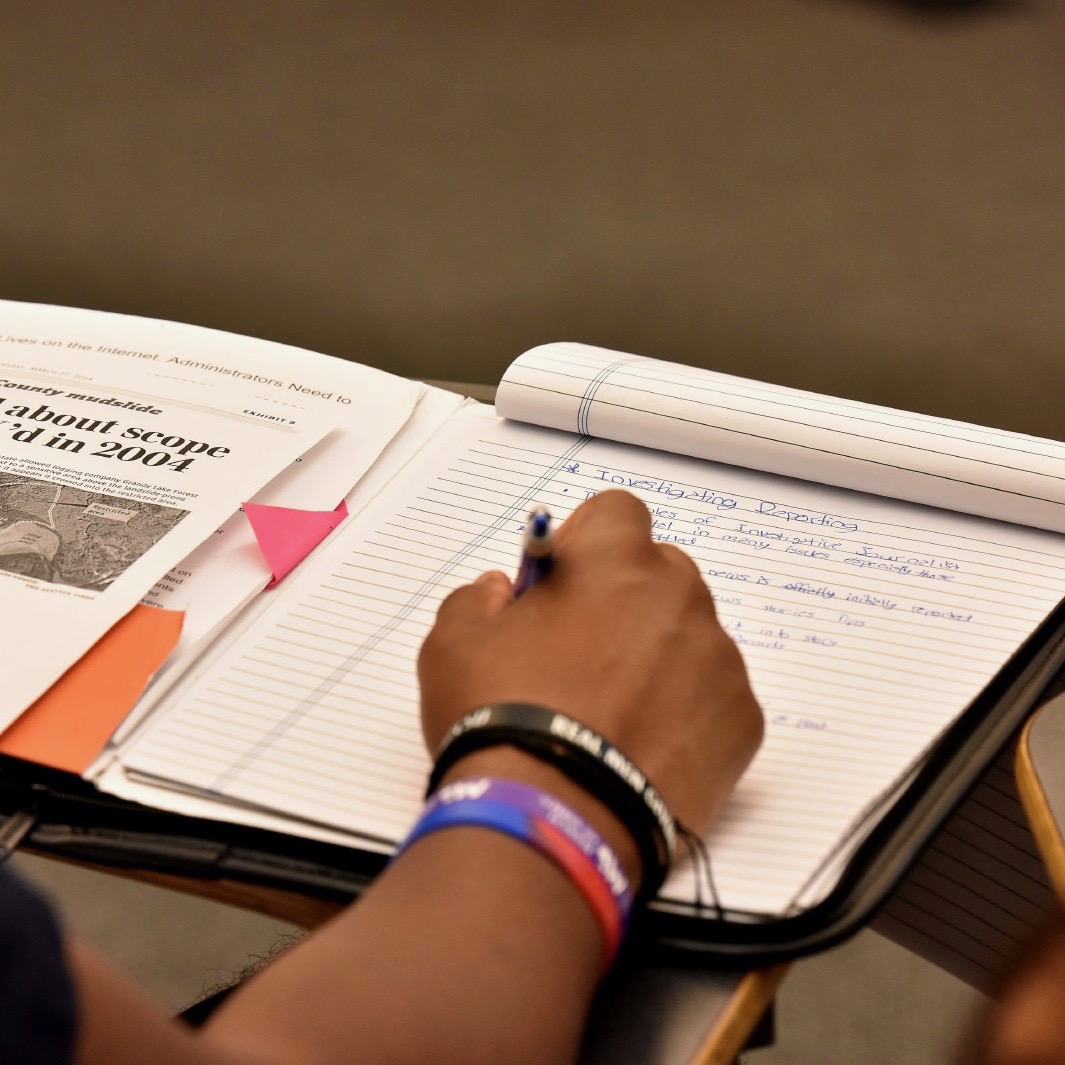
Having a pen in hand (and using it with some frequency) will set you up for active reading.
The precept response is a veritable Princeton institution, right there alongside Reunions, long nights in the library, and overly-friendly sidewalk squirrels. Somehow, I didn’t encounter this special form of assignment—where, as the name suggests, you “respond” to that week’s readings—until my sophomore year, but now I feel as though these responses set the rhythm of my academic week. On Mondays I’m responding to readings for a seminar on mythology. Wednesdays, for a history of science course. And Fridays, for a junior colloquium in Religion. Yes, friends, I cannot escape the precept response, and if you’ve read this far, I suspect you cannot either. As a celebration of our shared weekly assignment, I’d like to offer some tidbits of accumulated wisdom for completing the precept response.
As a concentrator in the Woodrow Wilson School, I have finally reached the much-discussed junior year, a year full of research seminars, task forces, and not one, but two JPs. Before the semester started, I was given a list of 8 to 10 research seminars and asked to rank my preferences. I’m interested in researching race and discrimination, but the limited selection meant that none of my options exactly matched up to this. Now I’m in a seminar about Maternal and Child Health in the U.S., and I have to face the nerve-wracking question: how do I pick a JP topic in a subject I’m totally unfamiliar with? For me, the first step started with a simple attitude change.
Sometimes graduate students are the older siblings you didn’t know you had.
In my Orange Key tours, I always emphasize how exciting it is to be an undergraduate student at Princeton. Unlike many other leading research institutions, Princeton maintains a strong focus on undergraduate teaching. This results in an unusual dynamic between undergraduates and graduate students on campus. In general, the two populations are pretty segregated. Aside from the preceptor-student relationship (and, of course, the ReMatch relationship), I haven’t encountered a whole lot of avenues for collaboration between undergraduates and graduate students in our research projects.
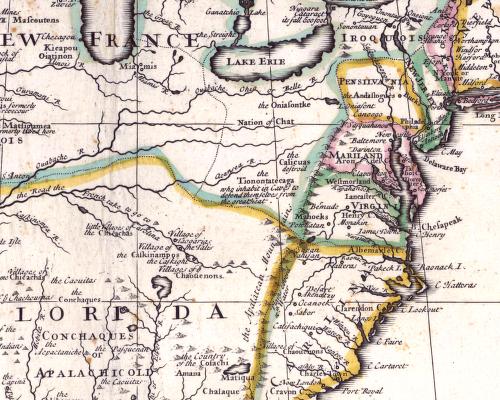
Map of Northeastern Native tribes (ca. 1710), the subjects of my JP research
Research can be a truly thrilling experience–interesting data, new findings, surprising collections. However, research can also be incredibly frustrating, namely when you feel like your work isn’t going anywhere.
If you’ve ever been really excited about a topic, done a load of research, and still found that you aren’t making forward progress, this post is for you. I’m talking about hitting tough obstacles in your research–walls you can’t seem to get over–reaching what seems like a dead end.
I’ve been there before (oh more times than I would like to admit), and what I’ve found is that normally, this frustrating lack of a solution is not an indicator that your research is ‘wrong’ or isn’t worthwhile. In fact, it might actually mean that there is another question buried in your topic that needs to be addressed primarily.
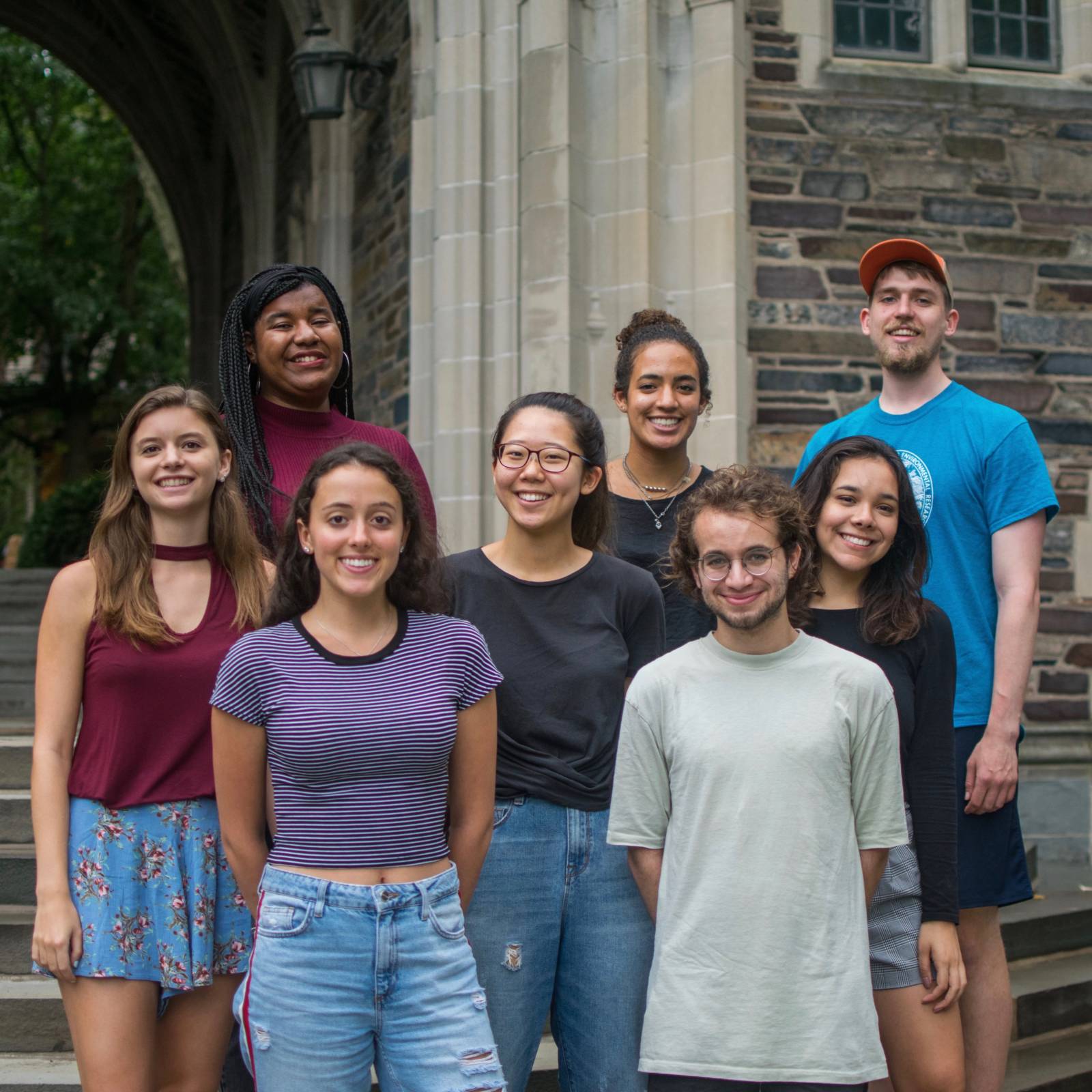
It’s that time of year again. The hustle and bustle of the beginning of the year begins to die down–new dorms have been moved in to, another fall lawn parties has come and gone, textbooks have been purchased–and now its time to jump right into the nitty gritty. As we finish up our second week of classes, the assignments start flooding in and it’s time to get back to work. PCUR is here to help! Join me, our four returning correspondents: Rafi, Shanon, Alec, and Elise, and four new fresh faces: Andrea, Saira, Nanako, and Raya. Coming from a wide variety of disciplines, this year’s team is ready to guide you through the coming academic year.
The 2018-2019 PCUR Team (minus Shanon), photo courtesy of Marah Sakkal
If you have specific questions that you would like to see answered, use the Contact Us form and let us know what kinds of post you want to see! Also new this year, some of our posts will be featured on the Princeton University Instagram story! We’re looking forward to a great year, so continue reading below to see what our new correspondents are bringing to the table.
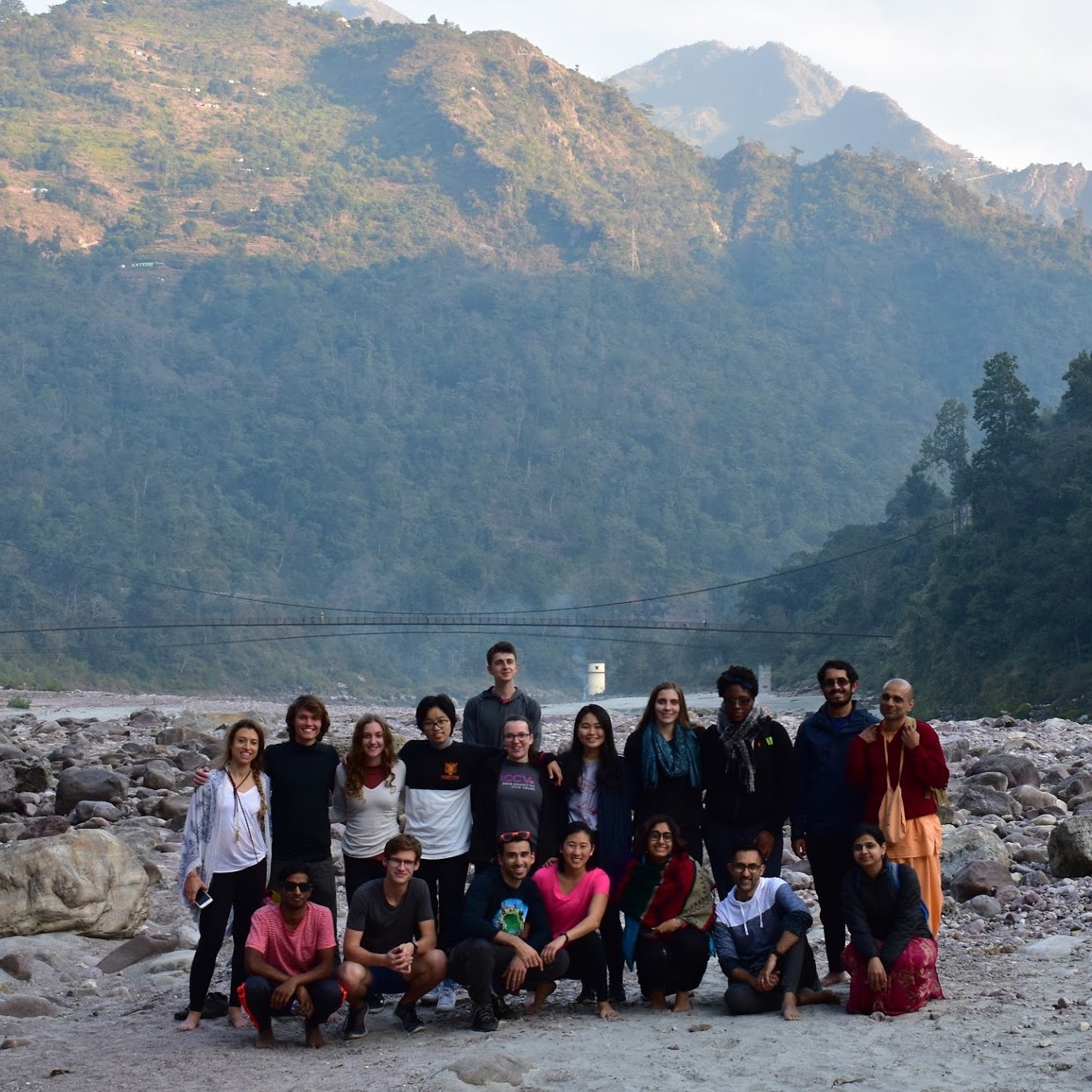
The author and the 2017-2018 ORL Yoga and Meditation Fellows on the banks of the Ganges River above Rishikesh, India. Like many good things, this opportunity became a reality thanks to an attitude of flexibility.
It’s hard to believe, but this is my last post of my sophomore year. This PCUR “ending,” however, comes at a time when I’m still in the middle of working on Dean’s Date assignments and (thinking about) preparing for final exams, so there’s something a little dissonant about writing a reflection post right now. Indeed, I suspect that only after the last exam wraps up, or after I move home and begin my summer job, will I be able to reflect more fully on my sophomore year. Nevertheless, I do have some preliminary observations, which I hope others will find useful as they take stock of their own personal and academic progress this year.