Author:

  • Preparing for your Senior Thesis Before your Senior Year: Tips on Finding a Thesis Adviser


    Students in the Woodrow Wilson School—and other majors!—start preparing for their theses in their junior year.

    If you’re caught up on some of my earlier posts, you’ll remember that I’ve been working on my Junior Papers all year, ultimately gearing up towards the independent work that my senior thesis will require. However, as an underclass student, I was definitely unclear about what the senior thesis process would entail. I thought it was something I wouldn’t have to worry about until my last year at Princeton when, in reality, it starts much earlier than that (scary!!).


    (more…)

  • Professorship and Mentorship: An Interview With Professor Bernadette Pérez

    This winter, for our seasonal series entitled “Professorship and Mentorship,” PCURs interview a professor from their home department. In these interviews, professors shed light on the role that mentorship has played in their academic trajectory, including their previous experiences as undergraduate and graduate students as well as their current involvement with mentorship as independent work advisers for current Princeton undergraduates. Here, Rafi shares his interview.

    ~~~~~

    Professor Bernadette Pérez is a Lecturer in the Council of the Humanities, History and American Studies and a Cotsen Postdoctoral Fellow in Race and Ethnicity Studies in the Society of Fellows.

    I met Professor Pérez last semester as a student in her course on Commodity Histories. Throughout the semester, I was inspired by her commitment to interdisciplinary research and her focus on subjugated histories. I was excited to hear about her personal research journey and any advice she might have for a confused undergrad like me. 

    (more…)

  • 5 Reasons to Join PCUR

    Apply to join PCUR for the 2019-2020 academic year!

    As we return from Spring Break, we’re all getting ready to finish up the semester and launch into whatever we might have planned for the summer. However, now is also a time to reflect on the past year, and begin thinking about what we might want to change, or what we want to continue in the upcoming academic year. One exciting opportunity to consider is to join PCUR! We are now accepting applications for new correspondents for the 2019-2020 academic year.

    What is so great about being a part of PCUR? Continue reading to find out what the current correspondents have to say about why they joined PCUR, what they have enjoyed about the experience so far, and why they would encourage others like you to apply.

    (more…)

  • Professorship and Mentorship: An Interview With Professor of Religion Anne Marie Luijendijk

    This winter, for our seasonal series entitled “Professorship and Mentorship,” PCURs interview a professor from their home department. In these interviews, professors shed light on the role that mentorship has played in their academic trajectory, including their previous experiences as undergraduate and graduate students as well as their current involvement with mentorship as independent work advisers for current Princeton undergraduates. Here, Shanon shares his interview.

    ~~~~~

    Professor Luijendijk holds several appointments at Princeton, including Professor of Religion, Chair of the Committee on the Study of Late Antiquity, and Head of Wilson College.

    As part of our seasonal series on faculty research, I sat down with Professor of Religion Anne Marie Luijendijk to discuss her work in Early Christian History through the study of papyrus manuscripts. Having taken a course with Professor Luijendijk before, I must say that she is one of the most enthusiastic educators I’ve ever met. As such, it was definitely a privilege to speak with her about her own research. You can read our conversation below. If you’re interested in advice for working with a faculty adviser, the importance of taking walks, or the historical study of ancient religious manuscripts, then read on! (more…)

  • How to Give an A+ Presentation in Seminar

    In almost every seminar I’ve taken at Princeton, one of the main assignments has been a weekly student presentation. The professor typically passes a syllabus around the room and asks each student to choose a week or two to present. The structure of these presentations will vary, but I’ve collected some tips for how to prepare an A+ class presentation:

    Make sure you understand your professor’s expectations. How long is the presentation supposed to be? Are you expected to lead the whole class discussion or just introduce the readings? What types of information do they want you to provide: Background for the readings? Summary of the arguments? Your own analysis? It can help to schedule a meeting with your professor the week before you present to review these expectations and receive some personalized guidance. If you’re brave enough, consider asking these questions in class on the first day so your classmates can also benefit!

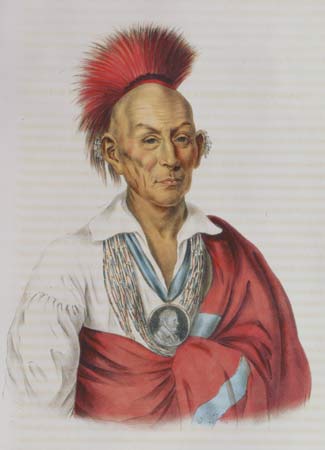
    Last week, I gave a presentation on the nineteenth-century warrior Black Hawk for my Native American History class. Meeting with my professor a few days before made the whole process so much easier.

    (more…)

  • Professorship and Mentorship: A Conversation with the Woodrow Wilson School’s Professor Udi Ofer

    This winter, for our seasonal series entitled “Professorship and Mentorship,” PCURs interview a professor from their home department. In these interviews, professors shed light on the role that mentorship has played in their academic trajectory, including their previous experiences as undergraduate and graduate students as well as their current involvement with mentorship as independent work advisers for current Princeton undergraduates. Here, Andrea shares her interview.

    ~~~~~

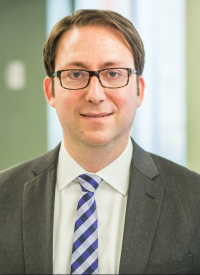
    Udi Ofer is a Visiting Lecturer in Public Affairs in the Woodrow Wilson School.

    Udi Ofer is a professor in the Woodrow Wilson School.

    Outside of class, he is the Deputy National Political Director of the American Civil Liberties Union (ACLU) and Director of the ACLU’s Campaign for Smart Justice, which is dedicated to ending mass incarceration in the United States. His background as a civil rights lawyer brings a valuable perspective to the task force seminar “Rethinking Criminal Justice: Policy Responses to Mass Incarceration,” which he leads in the Woodrow Wilson School. I’m taking his seminar this semester, and because of my interest in his research (see posts here and here about my JP last semester, which was also about incarceration), I decided to interview him as part of PCUR’s winter seasonal series.


    (more…)

  • Macs, Tablets, Photoshop and More: Exploring the Digital Learning Lab

    Have you ever wanted to learn Photoshop or make a 3D model? Maybe you’re trying to edit a video or record a podcast?

    This year, I have become a frequent visitor to the Digital Learning Lab (DLL), an interdisciplinary, digital creative space located in Lewis Library. I first visited the DLL in the fall in order to borrow a drawing tablet to make a digital illustration for an issue of Nassau Weekly. Since my first introduction to the DLL, I have continued to learn more about all that is offered there, and I had to share!

    (more…)

  • De-Mystifying the Black Box Part 2: Research Abroad and Narrowing Everything Down

    I went to Paris! Not just for fun—although it’s a dope city—but to get some thesis research done to narrow down a topic. In the first part of this series, I mentioned how I submitted an application for funding to research advertisements in museum archives and libraries in Paris. My goal was to narrow down the initial research question I had at the very beginning of my research process: how Public Service Announcements (PSAs) subvert the capitalist practices within traditional commercial advertising. My goal was to see the advertisements that inspired the French theorists I’ll be drawing from in my thesis. But, alas, there was one problem—when faced with an entire archive of advertisements, where do I even begin??

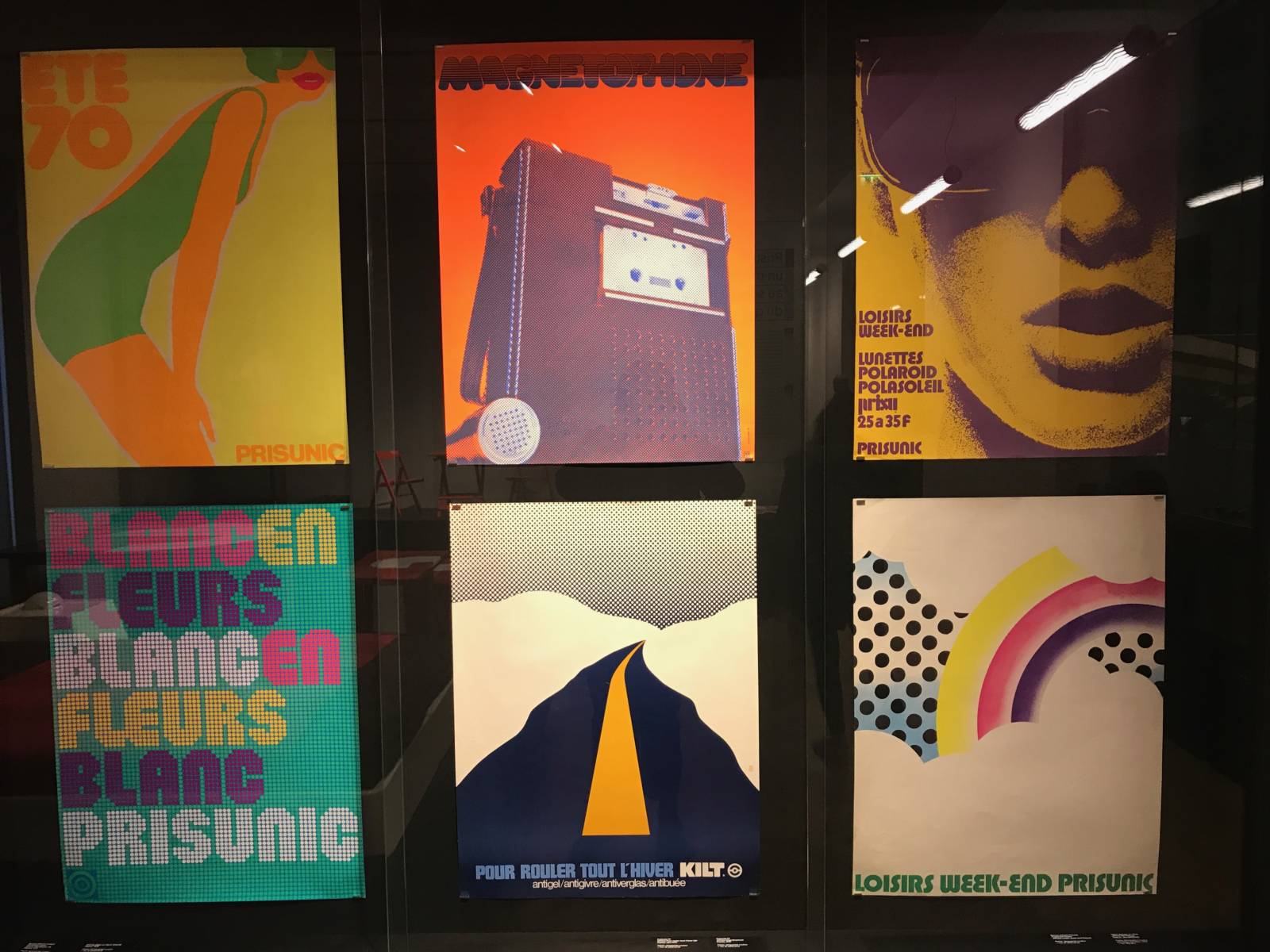
    Some pretty iconic French ads I was inspired by at the Museum of Decorative Arts

    I spent most of my time at the Bibliothèque Forney, a library specializing in design and the decorative arts. I emailed ahead of time to speak with one of the librarians, who wanted to get a sense of my argument and which advertisements he could direct me into researching according to my response. After explaining my general thesis topic and the research I had done in my previous two JPs (pro-tip: explaining a thesis topic in a foreign language is a good marker for how well you understand it—or rather how much you don’t), he responded bluntly: “You really need to narrow this down.” My face fell. That’s exactly what I was trying to do, the very reason I was in that library. I didn’t have a corpus of ads, which is what I was in search for in Paris. I had kind of hoped to look at a vast layout of ads and just be naturally drawn to an era, a medium, a theme, or product, but I quickly realized it was far too unrealistic to be able to survey three hundred years of French advertisements and just hope that a few of them would speak to me so I could write eighty pages about them. The librarian asked me how much time I had to write my thesis, suggesting one to two years, and I chuckled, slightly panicked, and said “six months.”

    (more…)

  • A Research Reflection: Discovering Historical Documents in Rare Books

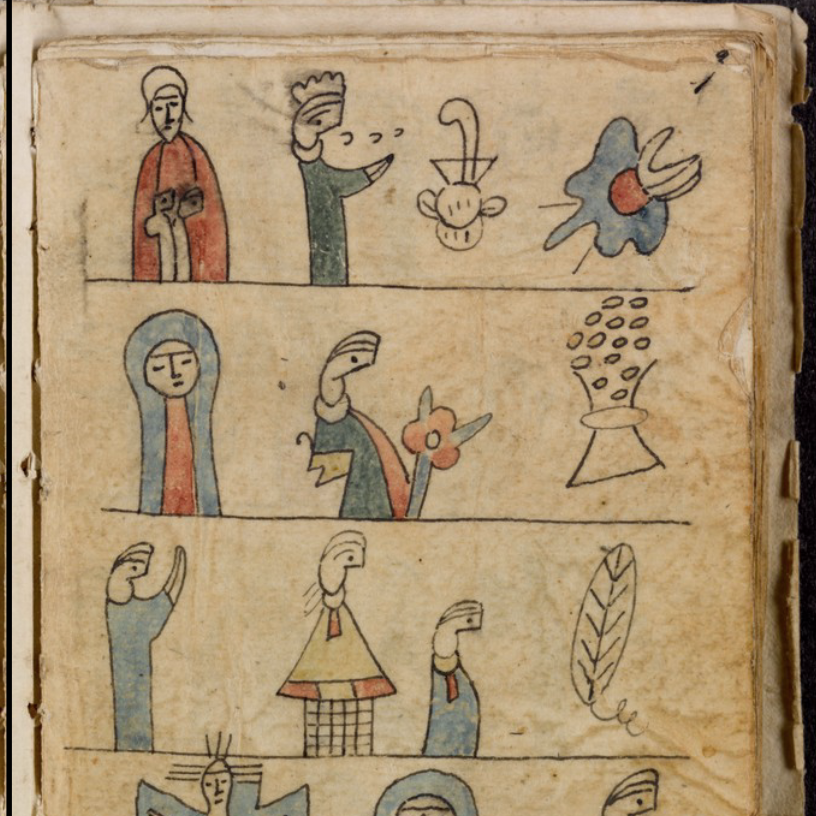
    A sample page of the “Catecismo pictórico Otomí,” a rare surviving example of the sort of materials used by Spanish missionaries to attempt to convert Native American populations. A wonderfully digitized version of the catechism can be accessed via the library website.

    This semester, I’m taking REL 357/HIS 310: Religion in Colonial America and the New Nation with Professor Seth Perry. Even though we’re only in the fourth week of the semester, we’ve been thinking about the final project for the class already, since it consists of independent research on a primary source from Firestone Library’s Rare Books and Special Collections Division, pertaining to the history of American religion. In this post, I’ll be sharing some of my reflections thus far on this project, which I hope will be of use to anyone engaging in primary source research—especially those feeling overwhelmed by the sheer volume of materials available to work with! (more…)

  • Trust the Qualitative: An interview with Sheila Pontis about Field Research

    When we think of academic research, we often think of libraries or labs. We might imagine flipping through books, reading articles, or running lab experiments, but there is a branch of research that looks much different than this. In fact, it looks like the real world.

    This branch is field research. Researchers from various fields apply this method of research, but in this post, I’ll be focusing on field research in design. Design is a big field with a wild range of applications. Design spans from information design (think infographics, instructions, maps) all the way to User Interface design (think apps and websites), but what’s at the root of design is a need to communicate effectively with people and facilitate understanding. The goal in design is to create systems that are effective–ones that work for their users. Accordingly, when designers conduct field research, they go out in the world and record qualitative data on people’s needs and experiences: What information are they searching for? What do they want out of a product? What parts of the current product are helpful? Which are frustrating and confusing?

    In this interview, Sheila Pontis, a lecturer in the Keller Center, talks about her work and encourages designers and student researchers to embrace field research and trust qualitative data.

    (more…)