For this year’s Winter Seasonal Series, entitled Research Resources: Unsung Heroes, each correspondent has selected a faculty member, staff member, or peer working for a research resource on campus to interview. We hope that these interviews will provide insight into the variety of resources available on campus and supply the unique perspective of the people behind these resources. Here, Andrea shares her interview
This semester, I took my first
fiction workshop in Princeton’s Creative Writing Program. I had taken two
poetry courses in previous semesters and wanted to try something new. (Pro-tip:
if you haven’t yet taken a CWR course, definitely consider applying for one
before graduating).
Creative writing is, in many ways,
a break from academic writing. It does not center on data, analysis, or
argumentation. Instead, workshops focus on developing compelling images,
characters, stories. Creative writing also has access to a wider variety of
forms than academic writing, which tends to adhere to a narrow set of
relatively conservative styles.
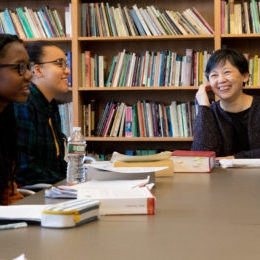
My Creative Writing professor, Yiyun Li, leading a Fiction workshop.
However, some of my workshop instructor’s writing advice has translated well to my academic writing. After all, writing is writing, and many of the same challenges confront both creative and academic writers. Below I’ve collected five of her best pieces of writing advice:
It can be difficult to find the perfect place to write. When I leave my afternoon classes, I often find myself standing on the sidewalk, unsure of where to go next. There are so many study spaces on this campus, but some days nothing feels right. (For some ideas, check out Nanako’s post about finding the perfect space for you)
The space where I work matters. And frustratingly, what I
need in a study space is in constant flux, depending both on my mood and the
type of work I need to get done: energetic spaces for sleepy mornings, quiet
spaces for more focused work, and so on. Over my few years at Princeton, I’ve learned
how different study spaces affect me: campus cafes are energizing, but
distracting; Firestone carrels are productive, but isolating; and my dorm room puts
me to sleep within fifteen minutes—no matter the time of day.
With larger projects like a thesis or final paper, though,
it can be even harder to find the right space to write. In my experience,
larger projects require more focus and endurance, making it hard to be
productive in a loud, busy space. On the other hand, the prospect of extended hours
in library isolation is almost always unappealing to me.
No matter what kind of application process you’re working through, you’ll likely need some letters of recommendation. There are a lot of common misconceptions about how to go about securing these letters that I will explain here; I hope this post will help clear some of them up!
Taking notes with an eye toward synthesis (that is, making connections to previous material, readings, lectures, and so forth) can give you a head start on the writing process.
One of the challenges of college is assimilating large amounts of information from a variety of sources: lectures, course readings, independent work research, precept discussions, extracurricular programming—the list goes on and on. Compounding the challenge is the fact that what’s ultimately demanded of students is not mere recall, which can be accomplished through memorization. Rather, we’re charged with synthesizing disparate materials, pulling things together, making connections across genres of information. In this post, I reflect on some of the ways I try to do this. (more…)
It’s been almost four years, and the generosity of Princeton faculty continues to surprise me. So many professors here are not just accessible to students, but deeply invested in supporting us in and outside of the classroom. It typically isn’t too hard to find at least one research mentor among our 950 full-time faculty.
Nevertheless, one institution’s faculty cannot possibly cover every sub-field or research topic. This has become especially apparent as I’ve moved towards the specificity required of a thesis project. In my case, no professor on campus studies Vilna, the Eastern European city at the center of my thesis.
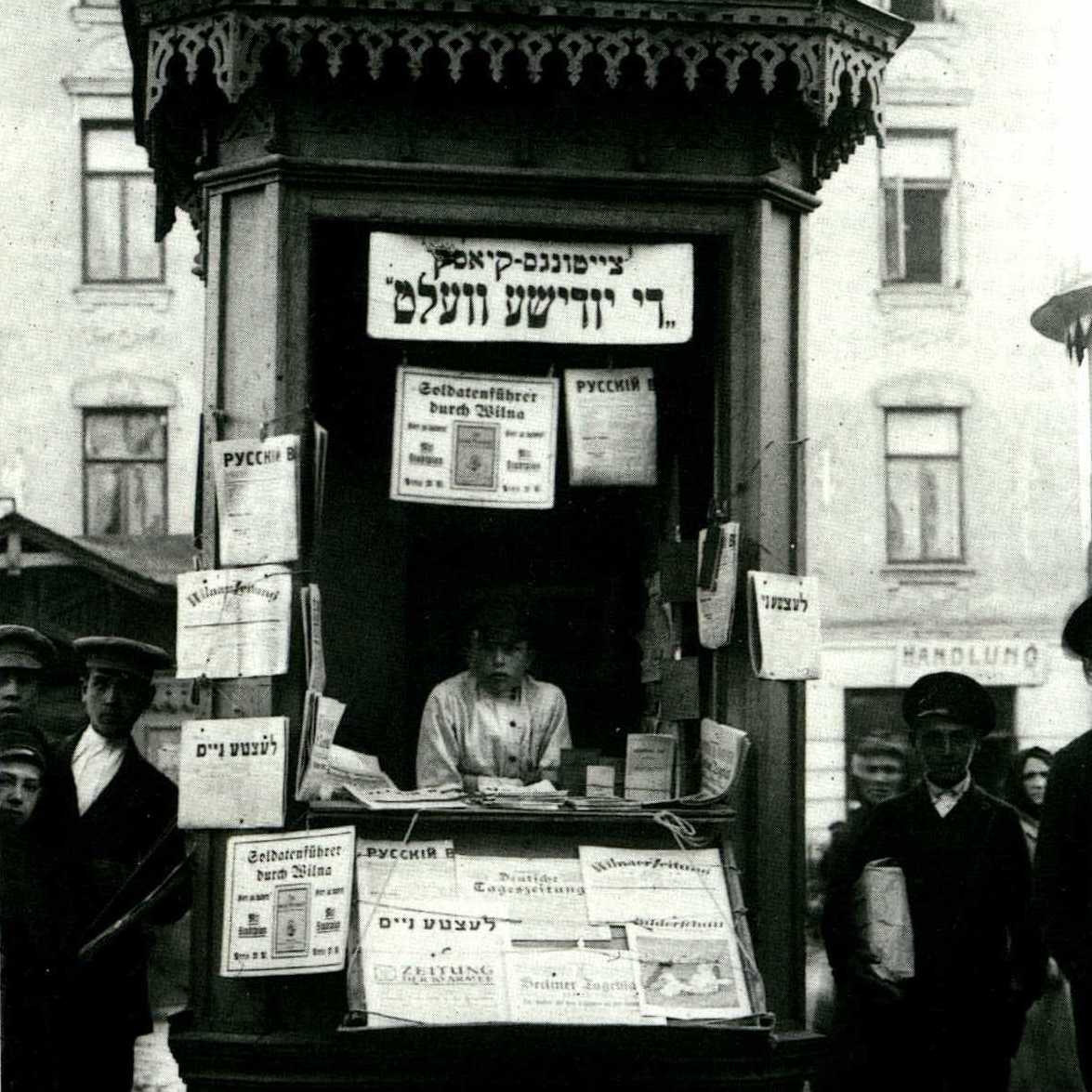
A newsboy in Vilna in the early twentieth century. Without guidance from professors at other institutions, I probably wouldn’t have selected this fascinating city as my thesis topic!
Of course, there are ways around this. For one, there is probably a professor on campus whose area of expertise has something in common with your project. My thesis adviser does not work on Eastern Europe, for example, but she is an expert in writing urban histories. So even though Vilna is new to her, she has been invaluable in guiding my methodology and argumentation.
She has also encouraged me to reach out to faculty and graduate students in other departments and at other institutions who might be more familiar with Vilna itself. Connecting with these scholars has turned out to be one of the most valuable aspects of my thesis process thus far. I’ve compiled some tips for accessing the rich academic network beyond your particular department or university.
It’s officially November here at Princeton: the leaves have changed, midterms are over, and fall break is but a blissful memory. If you’re anything like me, this means that you’ve finally settled into the rhythm of the semester. However, it also means that the question you’ve likely been avoiding since the beginning of the year–what will I do this summer?–is becoming harder and harder to ignore, as deadlines that once seemed distant are now imminent.
As a first-year, I remember that this pressure seemed terrifyingly intense. I was surrounded by sophomores, juniors, and seniors who were anxiously applying to dozens of positions, interviewing, and accepting offers–while I was still busy trying to make friends and adjust to the demands of Princeton’s fast-paced schedule. How could I know what I wanted to do with my summer when I wasn’t even confident in my extracurriculars or my concentration?
If you relate to this sentiment at all, don’t fret. The answer to your woes? Spend a summer doing research! Princeton provides an incredible number of summer research opportunities that span a wide range of fields. If you’re uncertain of your major (like I was!) or don’t know what you want to do with your life, I’d argue that a summer spent doing research can be beneficial for a wide variety of reasons.
While advising and formal research mentorship have been highly rewarding at Princeton, I have found more informal discussions with friends and classmates here to be invaluable in the development of my own ideas.
A professor recently offered this advice in class: if writing a paper isn’t going well—if you’re feeling the notorious “writer’s block,” for instance—then try writing a letter instead. In his view, this needn’t be a real letter to an actual person. The main point is to try to explain what you hope to achieve in a different way to a different audience.
Though I’d never tried letter writing of this sort before, I immediately appreciated my professor’s advice because of how it connects to a practice I’ve implemented in my own life for quite a while. That strategy is to “talk it out”—to take a break from a task that’s frustrating me and talk through the problem with a friend. This is the first reason that I think talking about research is helpful for each of us: it helps us clarify our aims and work through challenges. (more…)
Colleges like Princeton love to brag about their high rates of student involvement in research: our admissions pamphlets are peppered with student testimonials about the accessibility of professors and the university’s commitment to undergraduate research. But although Princeton does provide incredible resources, doing research with professors doesn’t always feel accessible. Especially as a first-year or sophomore student, it can be challenging to find research opportunities outside of classes (except during the summer).
As a first-year student, I definitely felt this pressure in the fall semester. I knew I wanted to be a part of research on campus as soon as possible, but I worried that no professor would want to work with me. After all, I was less experienced than many older students, and as a CBE major, I knew that quantitative and technical skills were of paramount importance in my field. Though I was afraid of being ignored (or worse, rejected!) by professors, I decided to reach out anyway. I emailed my MOL214 professor (who runs a lab in CBE) hoping that he would help give me an introduction to the department. When I went to his office for a simple discussion, he ended up offering me a position, and I’ve been working in his lab ever since!(more…)
The Syrian town of Tal Abyad, which has recently been conquered by Turkey. Below, I consider the role of “imagined” or Andersonian nationalism in this move, and how the study of religion can shed additional light on certain drivers of conflict.
I’m often asked why I study religion. To those asking, my decision usually registers as vaguely interesting, if a bit niche, but certainly not as very “practical.” Often such conversations prompt inquiry into my own religious life—as if one could only study religion out of personal piety or an ascetic willingness to forego the earning potential of an economics or computer science degree. Temperamentally inclined to charitable conversation as I am, I try not to take misunderstandings or dismissals of what I do too seriously. As other humanities students likely know, being on the receiving end of such attitudes come with the disciplinary territory. (more…)