
Categories
Senior Thesis

Writing a Creative Thesis: An Interview with Edric Huang ’18

Edric Huang, Class of 2018, Anthropology Major with Certificates in Creative Writing and Urban Studies

A couple of weeks ago, I interviewed Kristin Hauge about her independent work in the Music Department to highlight creative independent work in the arts. This week, I got in touch with Edric Huang, a senior in the Anthropology Department with certificates in Urban Studies and Creative Writing. Unlike most students on campus, he will be writing two theses this year. One is the classic research-based thesis that seniors in the sciences and humanities are familiar with, but the second will be a collection of poems for his Creative Writing Certificate. If you are unfamiliar with the kind of work that goes into creative theses, here’s what Edric had to share about his personal experience:


Categories
Junior Paper (JP) The Writing Process

Trusting My “Nugget”: Committing to Initial Ideas

Do you remember that old SAT advice of committing to your first multiple-choice answer? I have realized that choosing not to second-guess yourself applies to much more than standardized tests, and this realization has been an integral part of my research experience at Princeton.

Your intuition is as valuable as this pure Australian gold nugget!

When I’m confronted with a writing task, like seeing an essay prompt for the first time, thinking of my JP for this fall, or even this blog post (#meta), it is tempting to let myself panic and frantically begin brainstorming. But, before all of that chaos begins, an immediate seed of an idea always pops into my head. I call it my “nugget.” It could be a tidbit from a conversation I had with a friend, a theme I had been following in class, or, most recently, a side-note I had made over the summer about a potential JP topic.

However, I’ll often ignore my nugget as quickly as it appears. I’ll abide by “first is worst” logic and assume that the first idea I think of to start a research project cannot possibly be as developed as the result of hours of brainstorming. So, I’ll put myself through the ringer searching for other topics. But, almost inevitably, the products of these intensive brainstorming sessions fall short, and I circle back to my initial idea.

Categories
Research-based Courses The Writing Process

The Uncomfortable Truths of Home

The author’s grandparents moved into this house in Grosse Pointe Park, Michigan.

Research allows us to uncover the uncomfortable truths about our surroundings, or even our homes. I’m currently in AAS 350, an African American Studies class with Professor Keeanga Yamahatta-Taylor about the politics and policy of housing in the United States. It’s something that might seem straightforward at first — how complicated is building a house? But in reality, American housing policy and attitudes towards housing often perpetuate and preserve racist biases in the ways in which we build our communities.

Categories
Lab Research Summer Research

Advice on Reaching Out to Faculty

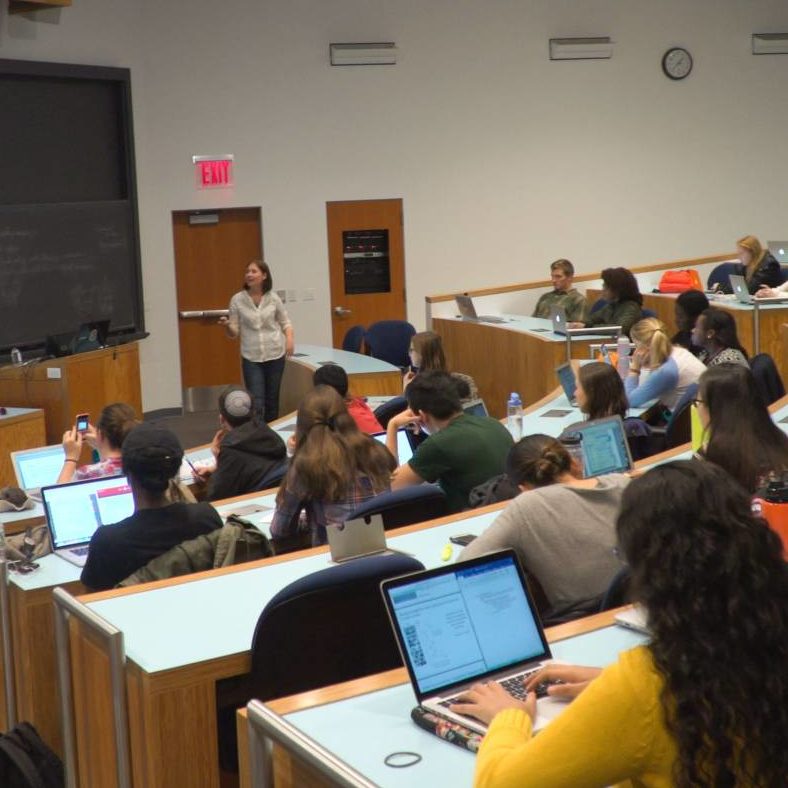
Sitting in the back of a lecture can make your professor seem distant. Reaching out via email, discussed below, can help you get to know them better.

In my last post, I ended with a suggestion: reach out to faculty members. This post is an assortment of advice on how to go about doing that. More precisely, this post is about how to get in touch with faculty for the first time. Yes, dear readers, today we discuss the joy that is the cold email.

There are several situations in which cold emailing can be in your interest. You might want to get to know the faculty member better, or to do research with them. You might also want their advice on research at other institutions, summer programs, or independent work. Whatever your individual case, however, certain general principles apply when reaching out to faculty.

If cold emails are new or intimidating to you, fear not. The advice contained below will (hopefully) make this menacing task feel much more manageable.

Categories
Summer Research

Mapping the Stars: An Interview with Reilly Bova ’20

Reilly Bova ’20 is a Bachelor of Science and Engineering (B.S.E) Computer Science (COS) major with a strong interest in Physics. He spent this past summer conducting research in Princeton’s Physics department. His work included the visualization of deep universe galaxy clusters.

A snapshot from Reilly’s work of the Cosmic Microwave Background projected onto the edge of the observable universe.

Reilly took data on some of the oldest and farthest discovered galaxies (several billion light-years away) and mapped them onto a computational model of the observable universe. He also added to the visualization extremely precise maps of the Cosmic Microwave Background (CMB), which is radiation from about 380,000 years after the Big Bang. Right after the Big Bang, the universe was so hot that nothing—not even photons—could travel unimpeded, which rendered the universe opaque. Around year 380,000, the universe had cooled enough that neutral atoms could form, rendering it transparent (i.e., photons could now travel through it) and releasing an enormous amount of energy which we now call the CMB. This Cosmic Microwave Background has been traveling through the universe for billions of years. As the universe expands, the wavelength of the CMB radiation lengthens (i.e., “redshifts”). We can generate a map of what the universe looked like very early in its life by measuring  these redshifts.

I recently had the exciting opportunity to interview Reilly and find out more about his research experience.

Categories
Funding Summer Research

Internship Step One: Reaching Out

A few weeks ago, I participated in an event hosted by Princeton’s Peer Career Advisers called an “Insider’s Look at Internships.” I was there as an ambassador for OURSIP—the Office of Undergraduate Research’s Student Initiated Internships Program. OURSIP makes it possible for Princeton students to pursue unpaid research opportunities over the summer, such as my own, by providing funding to cover anticipated expenses.

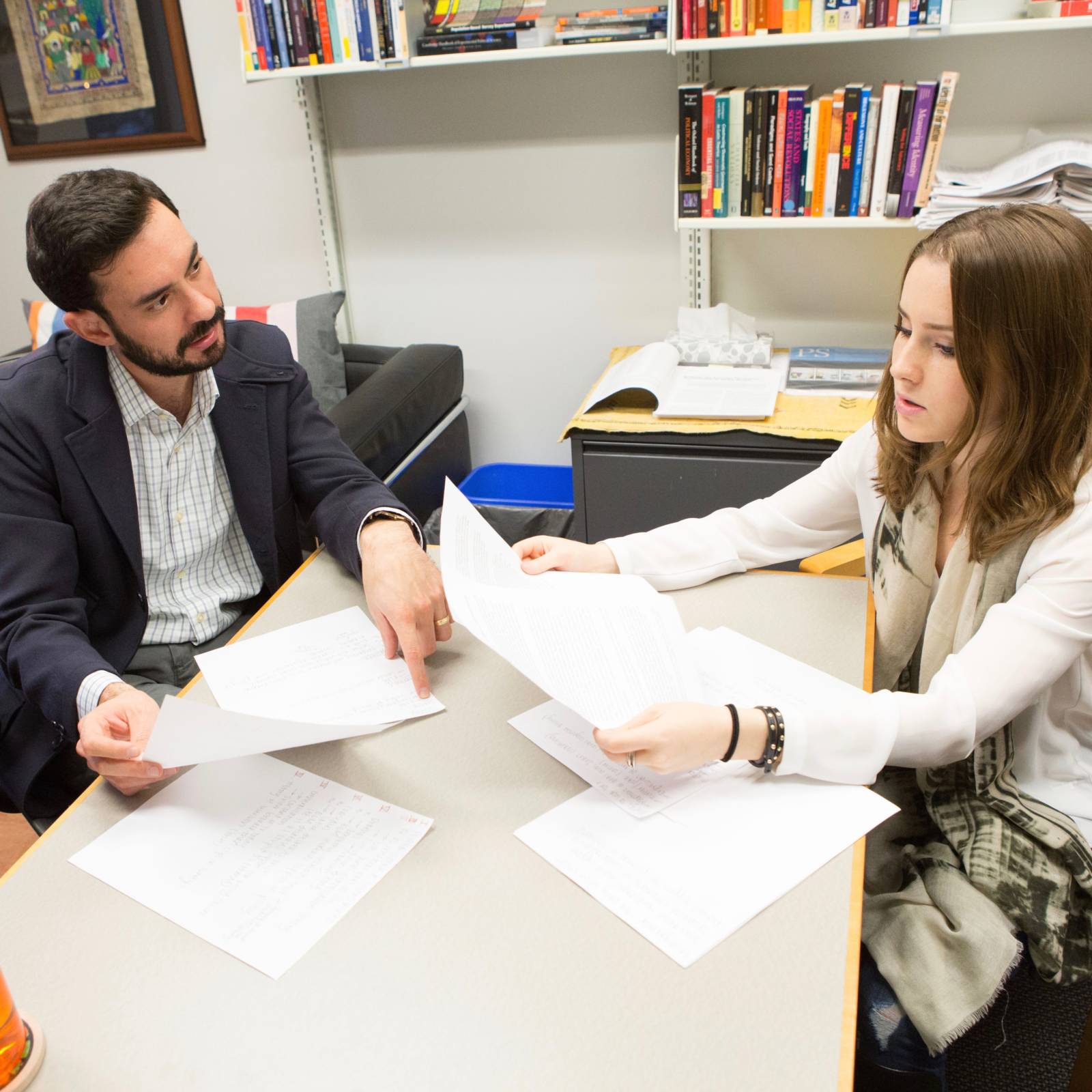
Use professors and advisers as resources to help find summer opportunities

The unique thing about OURSIP is that it asks students to take it upon themselves to secure their own internship before asking Princeton for help with funding. As opposed to other Princeton programs, like PICS or IIP, which also assist students in the internship search process as part of the program. As students came up to speak to me about OURSIP at the event, I found that their first question was always, “So what is OURSIP?” and after hearing my description their second, more hesitant question was always, “But how did you find your internship?”

Categories
The Writing Process

How to Become a Better Sleuth: Connecting with Faculty through Online Directories

Like many people my age, I am an uncertified, yet impressively efficient sleuth. Give me a name and some time, and I should be able to pull up at least two sources of information on any given person.

We know the process well: start with Google, aim for Facebook, and click on everything in between: Twitter, Tumblr, Instagram, news media, public tax records, etc. – not to mention the terrifying wonders of Tigerbook.

You probably already have your sleuthing system all figured out, but have you considered applying it to research?

Categories
Funding Junior Paper (JP) Senior Thesis

Need Funding? Tips for Writing a Convincing Proposal

There are many opportunities to apply for funding!

If you are an upperclassman, at this point in the semester, you’ve probably met with your adviser, decided on your research topic, and come up with a game plan for beginning your independent work. That said, you may still need to figure out one final detail: getting research funding. Not only does the Student Activities Funding Engine (SAFE) now have several applications open for Winter and Intersession research, but applications for spring funding will also be opening relatively soon. Even if you aren’t in the midst of writing a thesis, SAFE also lists opportunities for students who need funding for internships, summer study abroad programs, and independent projects. If this is your first time applying for funding and you’re worried about writing a convincing proposal, you’re not the only one. That’s why PCUR attended the Writing Program’s “Crafting Your Research Proposal” workshop to bring back some pointers. If you weren’t able to make it, here are the fundamental guiding questions to help make your research statement as clear and effective as possible:

Categories
The Writing Process

January Already? How to Begin Preparing for a Final Essay WAY in Advance

I surprised my inner procrastinator this week and thought about my final essay for my junior seminar a week and a half before midterms. I had written about an interesting theme in my Blackboard response, and thought in passing that it could make a good topic for an extended essay. I didn’t take this thought too seriously at first, because with finals being months away, I didn’t want to add any extra stress overthinking

Don’t be alarmed! You don’t have to have your final essay together now, but even giving it a passing thought early on is helpful.

everything. But then I realized that thinking long-term about finals, even casually, could actually make Dean’s Date a lot less stressful. I then made a mental note of this potential essay topic and planned on consistently revisiting it as I progressed through the course.

Several difficulties come with courses that have final papers. Some prompts are open-ended, leaving you to find a relevant and interesting research topic related to the course with little guidance. Others are more specific, requiring you to tailor a semester’s worth of information and synthesize it into a

Categories
Research-based Courses The Writing Process

Finding a Faculty Mentor at Princeton

At Princeton, ‘finding your way’ can seem as daunting as escaping the Labyrinth. Even when things are going well, I find myself asking thinks like: What are the best courses to take next semester? What should I do next summer? What should I do with my life?

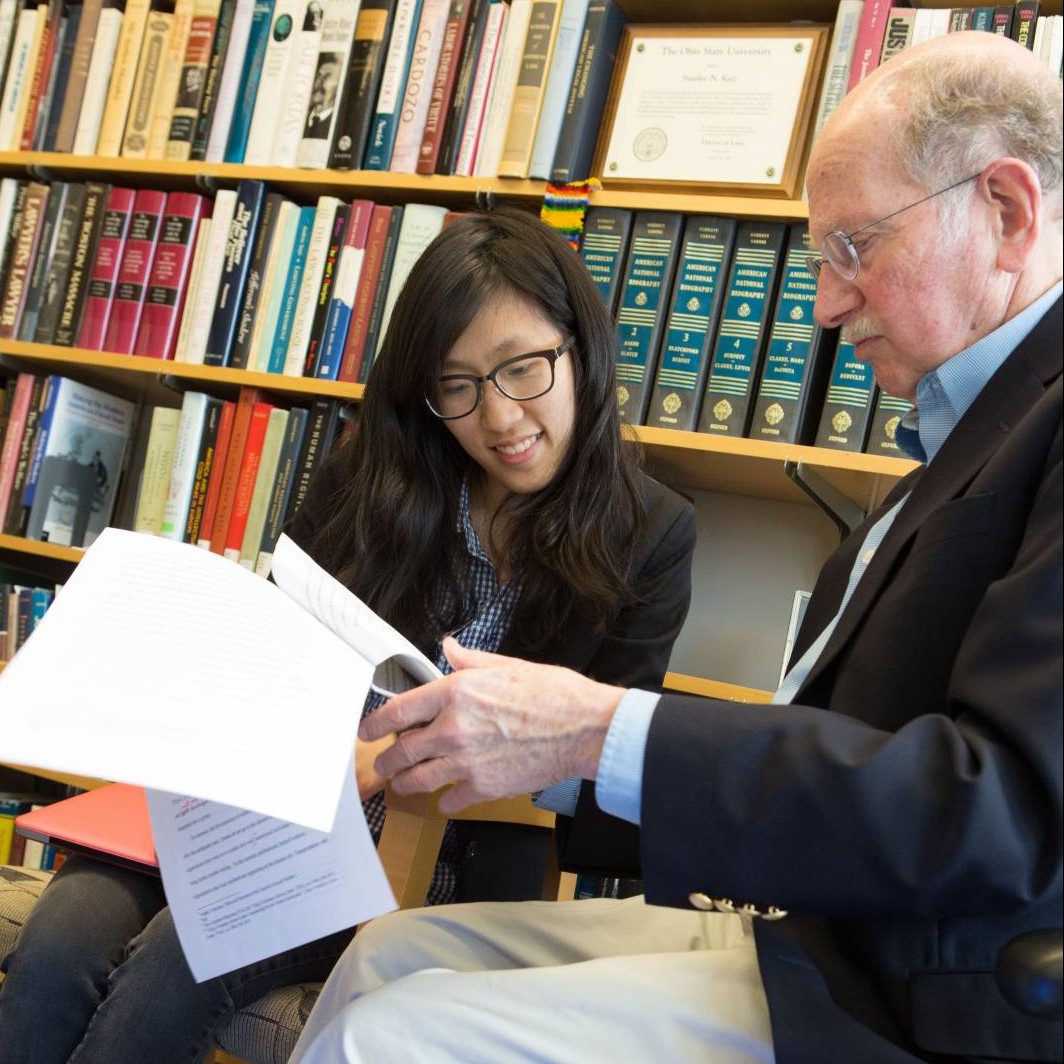
Developing a relationship with a mentor can be one of the most personally rewarding aspects of academic life at Princeton. 

Questions like these don’t have easy answers, and as best as I can tell, we shouldn’t expect to wake up one day with everything figured out. But chipping away at these questions is important, and I’ve found it much easier to do so with some guidance. Where do we get guidance, though?

Enter the mentor. The mentor is your wiser half, your sensei—the person who guides you through this mysterious world with sage advice and unflagging support.